
Bangkok Street Food Ordering Guide: Point & Pay (2026)
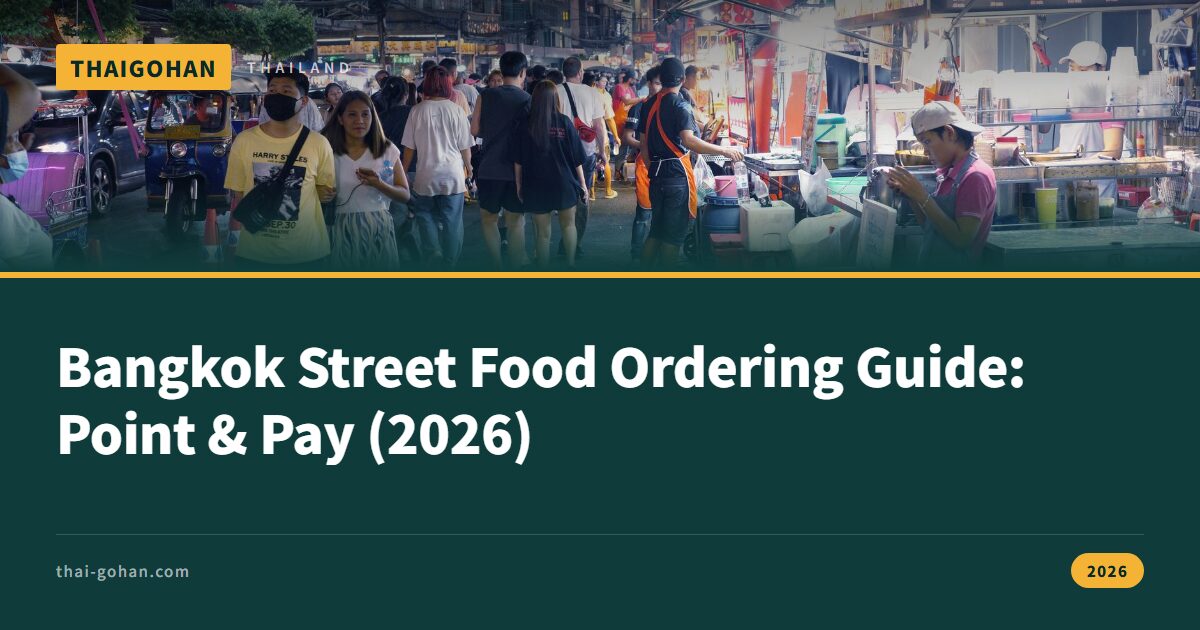
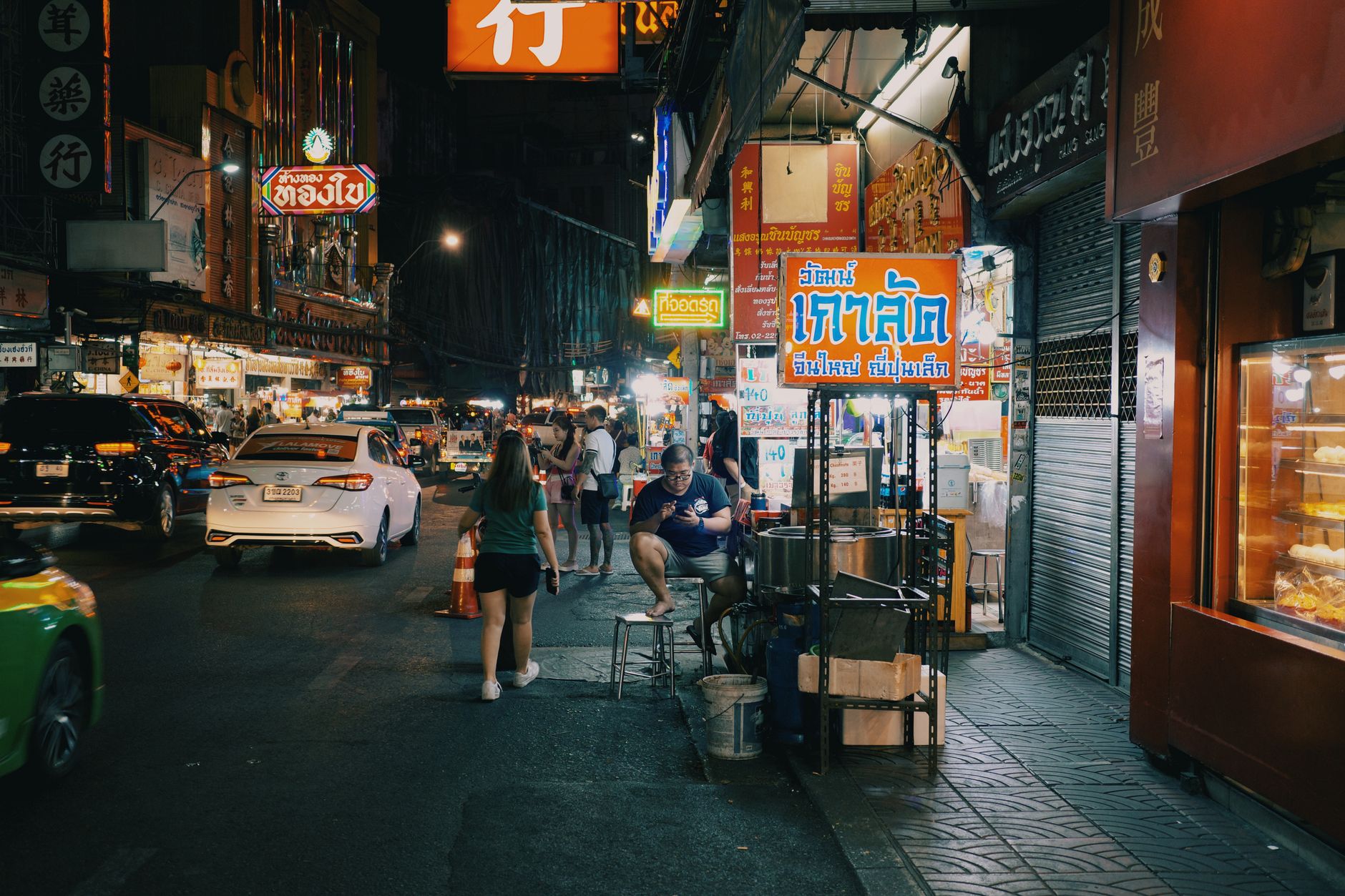
You can order Bangkok street food with pointing and cash. Even if you can’t read the menu, pointing at a finished dish on display or in a photo gets the message across. Payment is cash-based almost everywhere; food courts are the main exception, using their own coupon or card systems. Follow the steps in this guide and you won’t get lost, even on your very first street food outing.
What’s the Difference Between Street Stalls and Food Courts? Where Should Beginners Start?
Street stalls are independent vendors set up along the road, while food courts are indoor clusters of stalls inside shopping malls and other commercial buildings. First-timers will feel more at ease starting at a food court, where you order with a number ticket in a clean, air-conditioned space.
| Item | Street Stalls | Food Courts |
|---|---|---|
| Location | Roadside or corner of a market | Indoors, e.g. shopping malls |
| Payment | Mostly cash | Often a dedicated coupon or prepaid card |
| Language support | Varies widely by vendor | Photo menus are common |
| Seating | Simple folding stools/chairs | Shared air-conditioned seating |
| Best for | Travellers who want the local atmosphere | First-timers unsure about the menu |
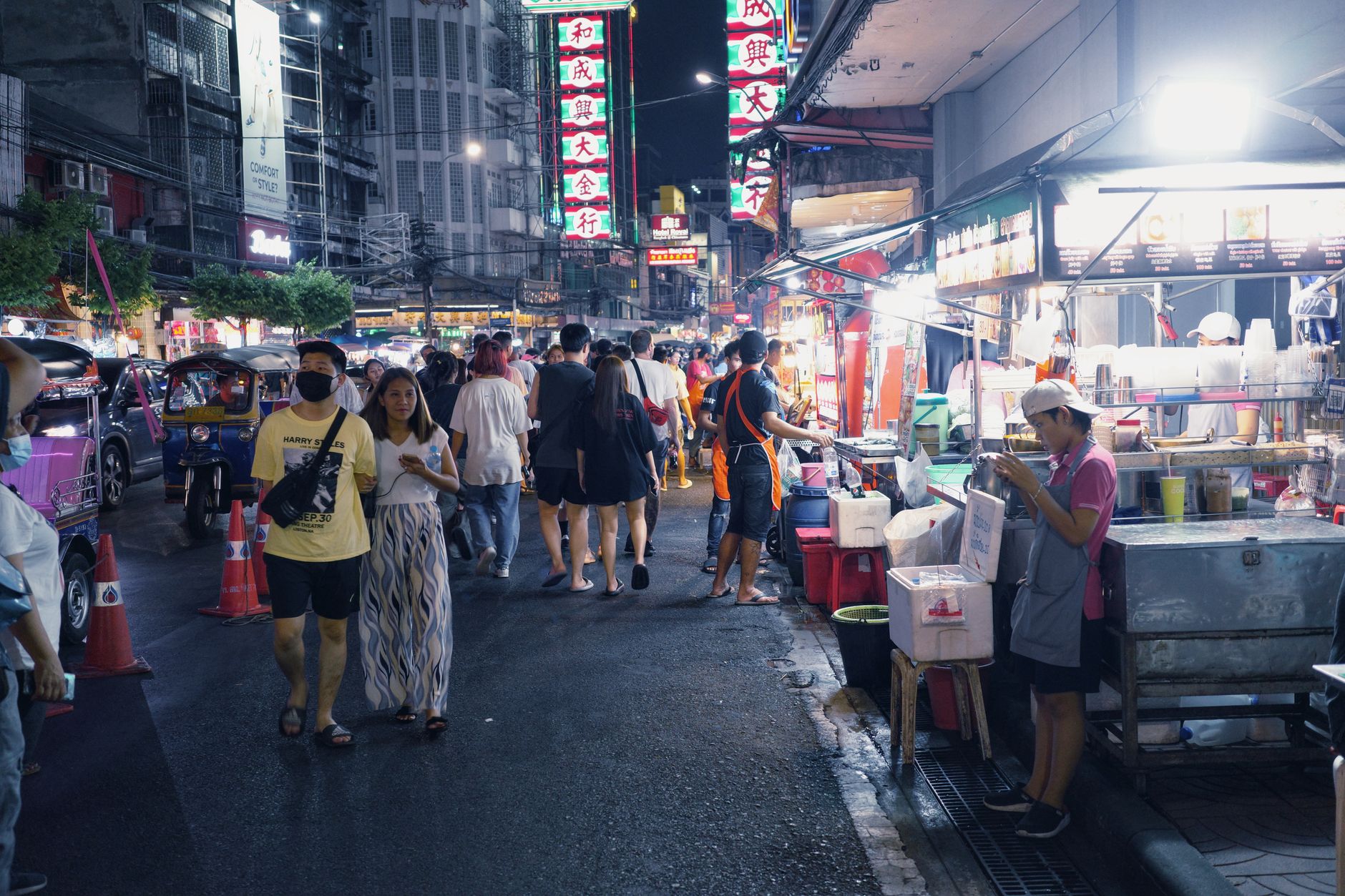
Shopping malls directly connected to BTS or MRT stations often have large food courts inside. If you’re unsure which train to take, check BTS vs MRT: A Beginner’s Guide to Getting Around Bangkok first — it makes planning your route on the day much easier. For picking which area to explore for street food, see Best Areas to Live in Bangkok: 5 Neighbourhoods Popular with Expats (2025).
Can’t Read the Menu? What Should You Point At?
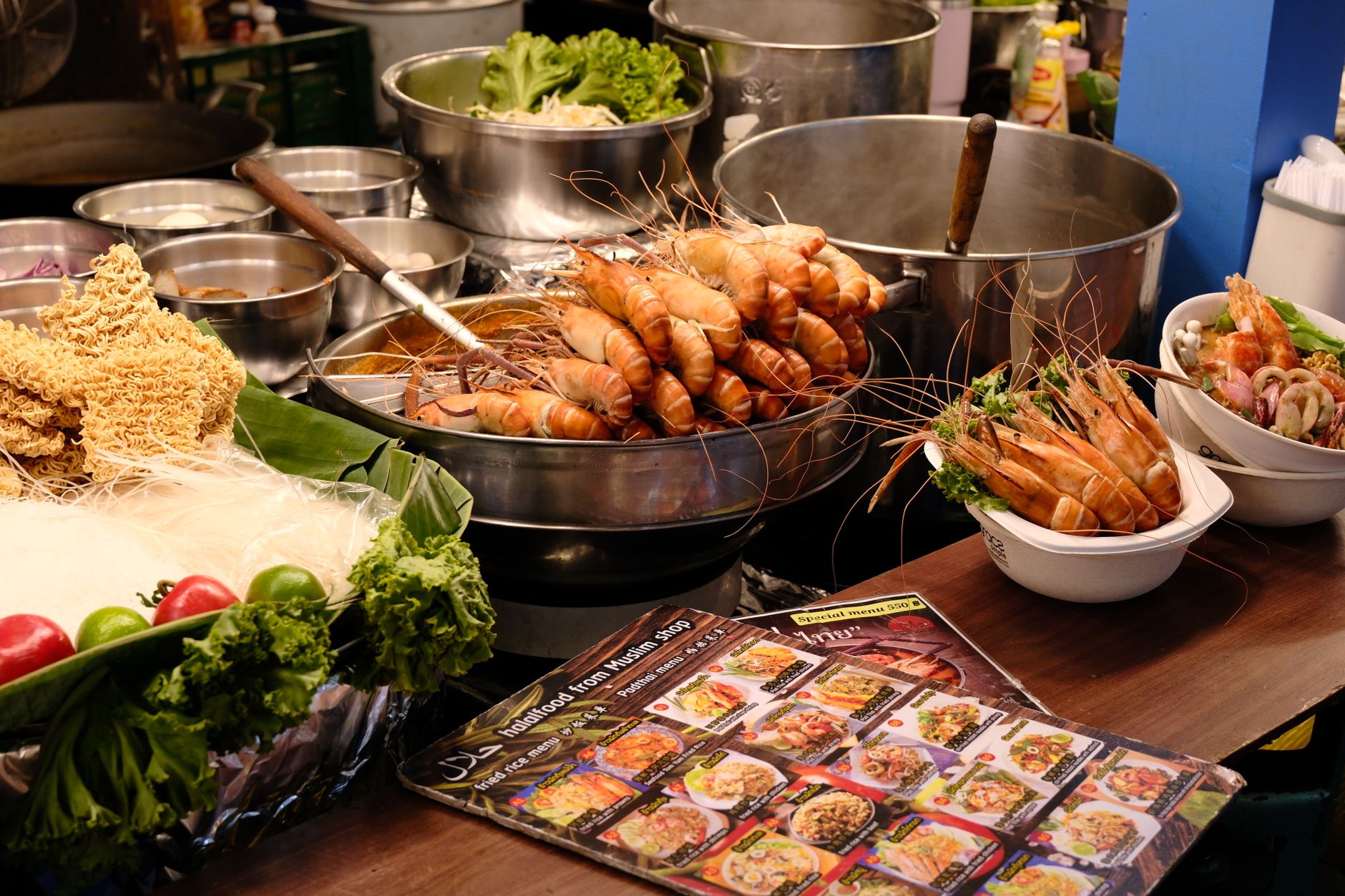
Pointing at a finished dish on display, a photo on the wall, or the plate at the next table is usually enough. Street food vendors are used to customers ordering by pointing.
- Point at a finished dish in the display case
- Point at a photo menu on the wall
- Point at the dish at the next table and say “an nan” (อันนั้น, “that one”)
- Show the dish’s name typed into a translation app
- Indicate quantity by holding up fingers
Thai dishes fall broadly into four cooking styles: tom (ต้ม, boiled/simmered), yam (ยำ, spicy salad), tam (ตำ, pounded), and gaeng (แกง, curry). Learning these prefixes helps you guess a dish’s style even if you can’t read the rest of the menu. Frying, stir-frying and steaming techniques are said to have been largely adopted from Chinese cuisine.
How Do You Say “Not Spicy” in Thai?
Say “mai ped” (ไม่เผ็ด) and the vendor will make the dish without chilli. If you want just a little heat, say “ped nit noi” (เผ็ดนิดหน่อย).
| Thai | Pronunciation | Meaning |
|---|---|---|
| ไม่เผ็ด | mai ped | Please make it not spicy |
| เผ็ดนิดหน่อย | ped nit noi | Please make it just a little spicy |
| ไม่ใส่ผัก | mai sai pak | Please don’t add vegetables (e.g. coriander) |
| รับกลับ | rap glap | To take away |
| อร่อยมาก | aroi mak | It’s delicious! (say this when paying) |
These phrases work best if said before cooking starts. Once a dish has already been plated, adjusting the spice level may not be possible.
Cash or QR Payment? How Much Cash Should You Carry?
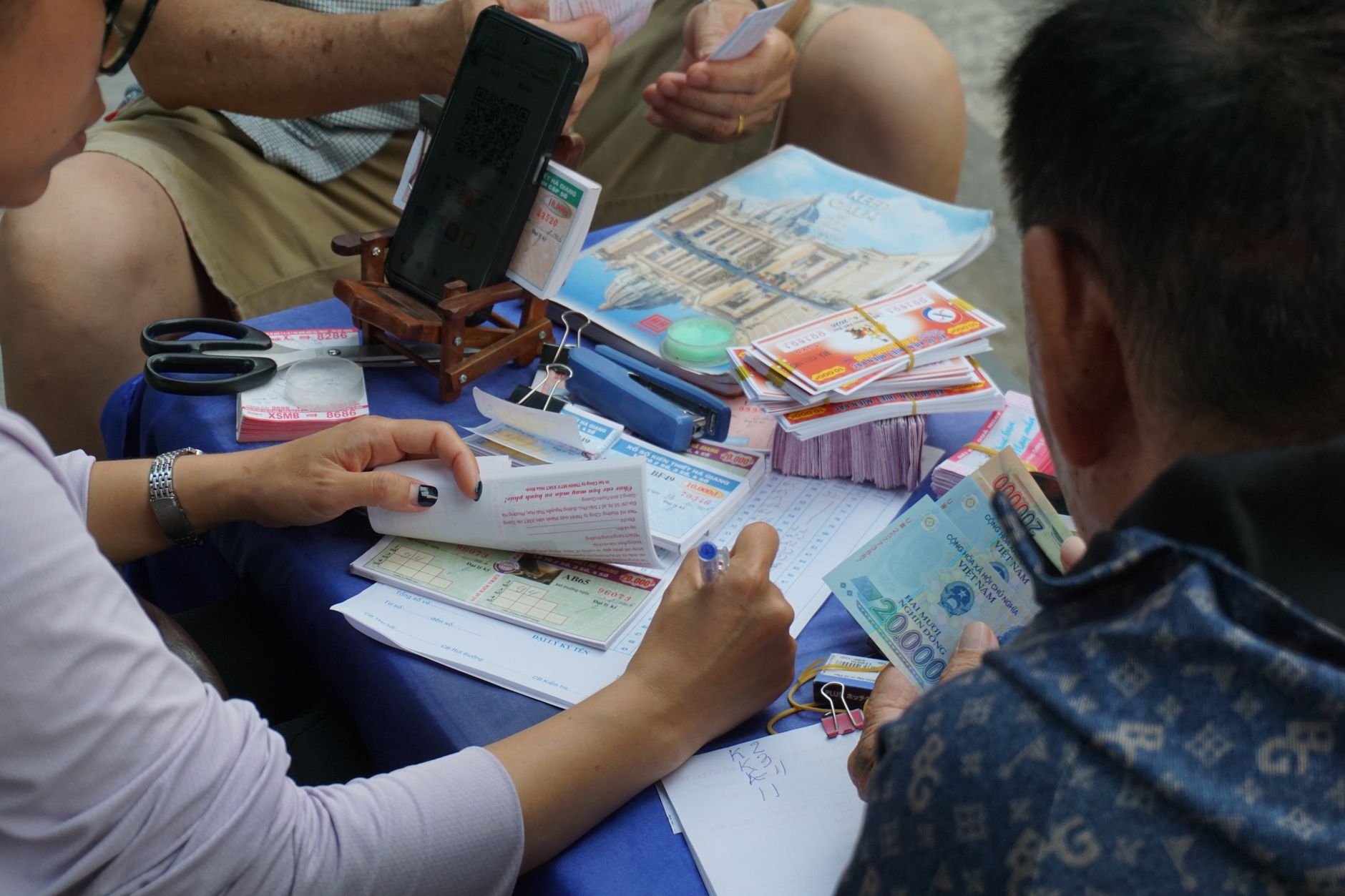
Street stalls run on cash. QR code payment is spreading at food courts and chain restaurants.
PromptPay is a QR-based payment system linked to Thai bank accounts and mobile wallets. Many stalls and food court counters display a shop-specific PromptPay QR code. However, credit or debit cards issued outside Thailand often can’t scan this QR successfully. Travellers without a Thai bank account or Thai-linked mobile wallet should plan on paying with cash as their default.
Street vendors sometimes can’t make change for large banknotes, so carrying plenty of small bills makes checkout smoother.
For more on balancing cards and cash while travelling in Thailand, see Can You Use a Credit Card in Thailand? Recommended Cards and When to Use Cash. Cashless payment on trains and buses is covered in Cashless Travel in Bangkok: Credit Card Payment Expands on Public Transport, though street food payment remains overwhelmingly cash-based. If you want a sense of overall food budgets during your stay, How Much Does It Cost to Live in Thailand? Bangkok vs Chiang Mai (2026) is a useful reference.
How Do Food Court Coupons and Cards Work? Can You Get a Refund?
At most food courts, you buy a prepaid card or coupons at the entrance or a central counter, then hand it to each stall in exchange for food. Unused balances can usually be refunded at the same counter before you leave, though the exact policy varies by venue.
- Tell the counter near the entrance how much you’d like to load, and buy a card or coupons
- Hand the card to the counter of whichever stall you choose, in exchange for your food
- If you have money left over after eating, return to the counter where you bought the card
- Show your receipt to get the remaining balance refunded (conditions vary by venue)
Refund policies and any handling fees differ from venue to venue, so always keep your original receipt. The card generally works at any participating stall within the same food court, but it cannot be used at a different mall or building.

How Do You Spot a Street Stall to Avoid for Hygiene Reasons?
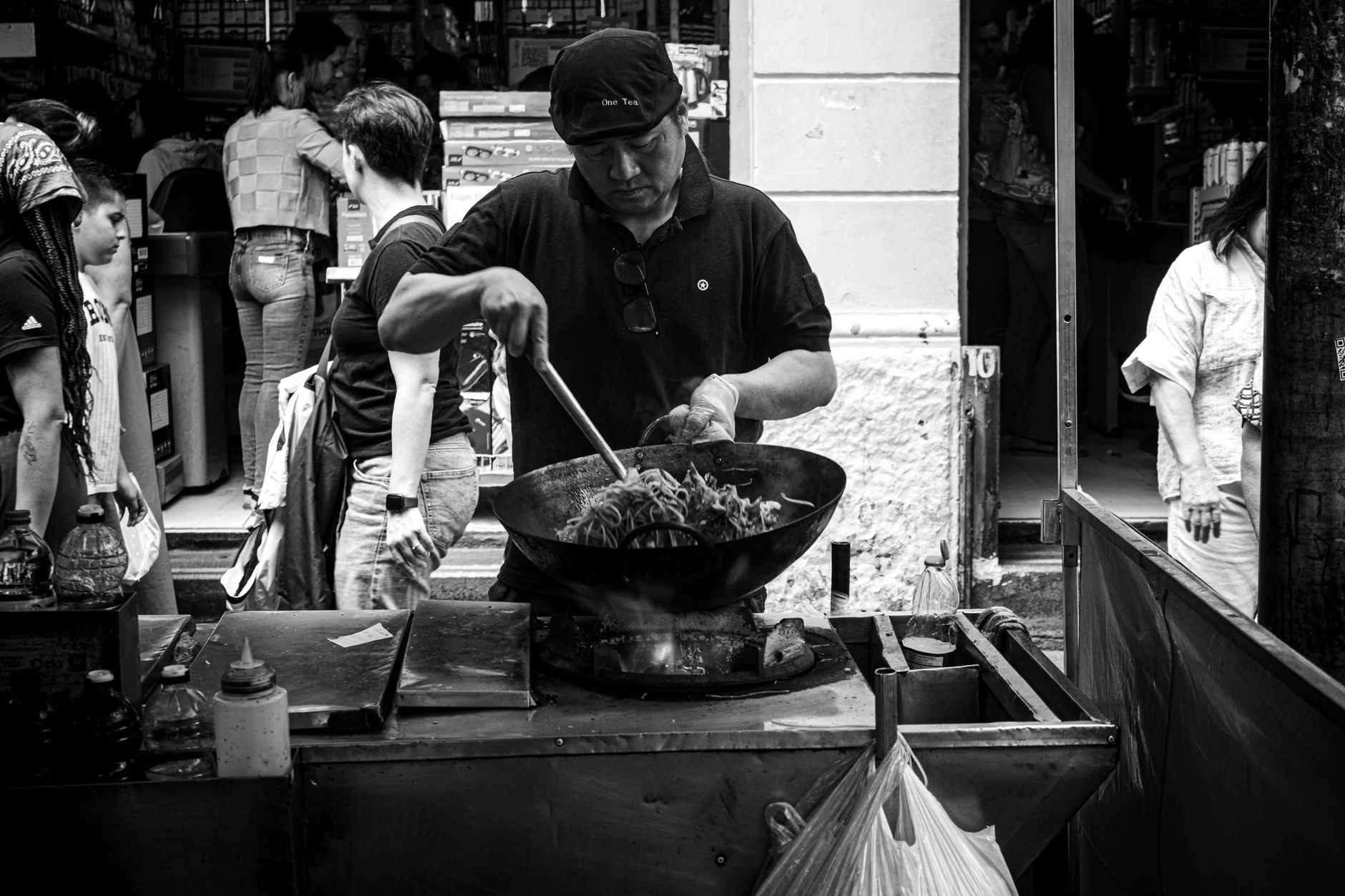
As a rule of thumb, choose stalls with high customer turnover and visibly clean equipment and ingredients.
- Avoid stalls where raw food sits out at room temperature for long periods
- Avoid stalls where cookware and cutting boards look greasy or unwashed
- Avoid stalls where the source of ice or drinking water is unclear
- A queue of local customers is one useful signal
- Bring wet wipes for your hands and utensils
These are general guidelines only. Conditions vary from stall to stall, so if something feels off, it’s fine to simply choose a different vendor.
What’s the Etiquette for Seating, Sharing Tables, and Clearing Up?
Sharing tables is normal at both street stalls and food courts. Feel free to sit at any open seat.
- Some stalls expect you to sit first and then order; others expect you to order first and then find a seat
- Don’t spread your belongings across more space than you need
- At food courts, return your tray to the designated collection point after eating
- At street stalls, it’s usually fine to leave your used dishes on the table
- A small nod to your table-mates is enough acknowledgment
Thai meals are typically eaten with a fork and spoon. The fork is used to push food onto the spoon, which then goes into the mouth; knives are rarely used at the table. The same etiquette applies at street stalls.
This shared-table culture is just as common at street food hubs like Khao San Road: The Complete Guide to Bangkok’s Backpacker Hotspot (2025). For more on budget travel styles, see Backpacking Bangkok on a Budget: A Day-by-Day Guide with eSIM Coupons (2025). Looking for something to do after your street food crawl? Best Rooftop Bars in Bangkok: Picks by Purpose and How to Enjoy the Rainy Season (2026) has suggestions for the evening. And if you’re planning to make repeated street food trips during a longer stay, it’s worth handling your visa and immigration paperwork alongside it — see How to Get a Re-Entry Permit at Bangkok Immigration.
Frequently Asked Questions
Is English spoken at street food stalls?
It varies by vendor. Combining pointing with photo menus usually works even if the vendor doesn’t speak English.
Is tipping expected?
Tipping isn’t a common practice at street stalls or food courts. It’s fine to simply take your change as given.
What if there’s no seating at a stall?
Use a nearby shared bench or an open seat at a food court. Ordering to take away (rap glap / รับกลับ) is another option.
Can you pay by credit card?
Generally not at street stalls. Some food court vendors accept cards, but it’s not universal.
Can spice level be adjusted for any dish?
Usually yes if the dish hasn’t been cooked yet. It’s harder to adjust once a dish has already been plated.
Can a food court card be used at other stalls?
It generally works at any participating stall within the same food court, but not across different venues.
Summary
You can order Bangkok street food with just pointing and cash. Even without reading the menu, pointing at a finished dish or a photo gets your point across. To adjust spice, say “mai ped” or “ped nit noi”. Payment is cash at street stalls and coupons or cards at food courts. Choose clean-looking stalls, follow simple shared-table etiquette, and even first-timers can enjoy street food with confidence.
Image Credits
- Photo: Tony Wu / Pexels
- Photo: King Ho / Pexels
- Photo: Duong Nguyen / Pexels
- Photo: Peter Kambey / Pexels
- Photo: Giovana Montes Furlan / Pexels
- Photo: Tony Wu / Pexels