
Thailand’s Fruit Paradise: Where to Eat June’s Durian & Mangosteen (2026)
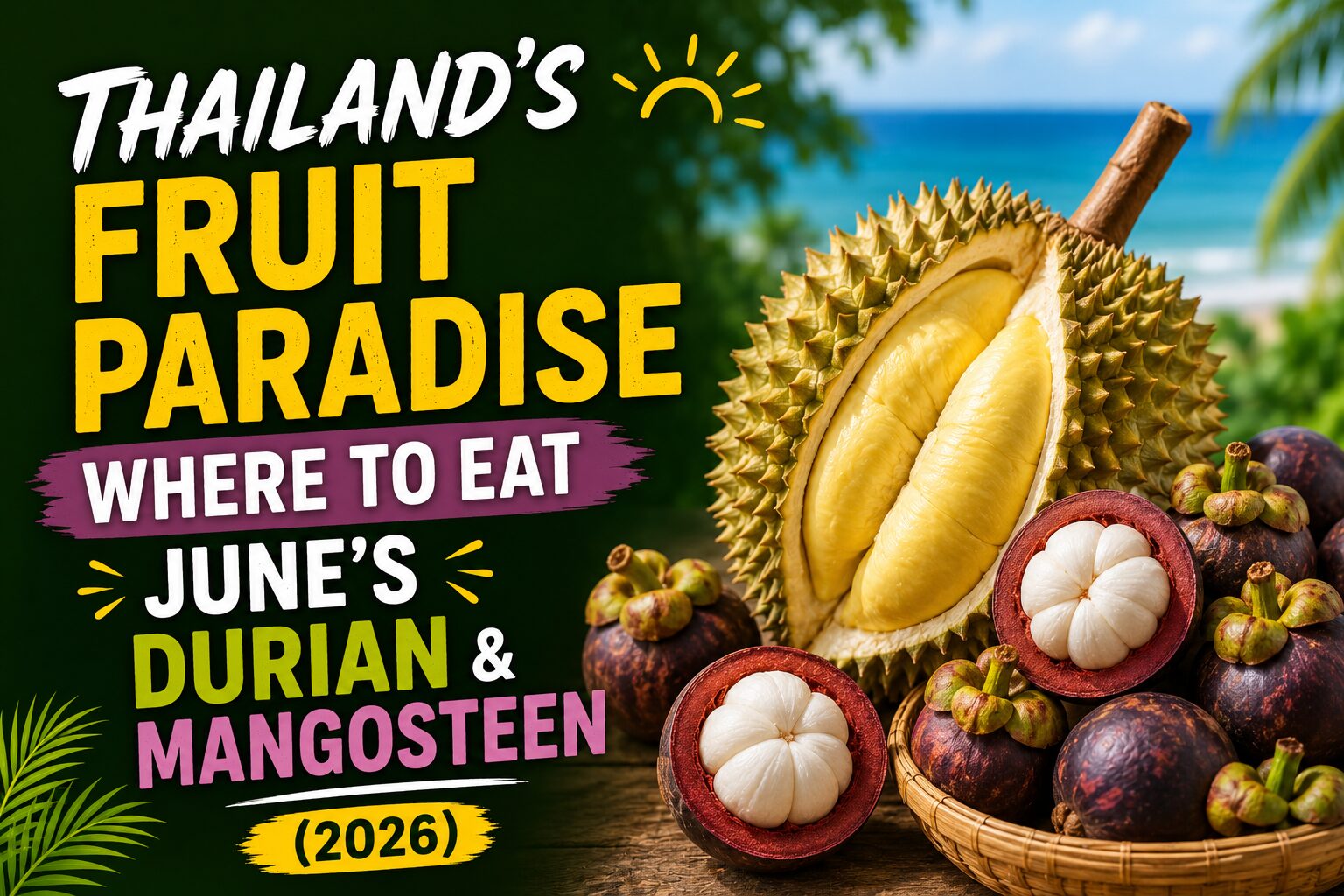
June is the most delicious time of year for tropical fruit in Thailand. The short answer: as the rainy season begins, the “King of Fruits” durian and the “Queen of Fruits” mangosteen both reach peak season at the same time, and prices become affordable. In Bangkok, even short-term visitors can easily enjoy seasonal fruit at markets like Or Tor Kor or in Chinatown. This guide covers which fruits are in season in June, how to choose a durian variety, where to eat them in Bangkok, and what to keep in mind when you do.
Why is fruit so good in Thailand in June?
June brings a wave of tropical fruit into season all at once. Thailand’s fruit season runs roughly from April to August, and June is when durian, mangosteen, rambutan, and longkong all approach their peak together.
✅ Durian season runs May to August, peaking in June for the best balance of flavour, aroma, and price.
✅ Mangosteen reaches its peak at almost the same time as durian.
✅ With more fruit on the market, prices drop and it is easy to taste and compare.
The rainy season may bring unsettled weather, but for fruit lovers June is a sweet spot.
What is durian, and how do you choose a variety?
Durian is known as the “King of Fruits,” prized for its rich, creamy flesh. It is famous for its strong aroma, but the smell and flavour vary a lot by variety. If it is your first time, start with a milder variety.
| Variety | Characteristics | Best for |
|---|---|---|
| Monthong (“golden pillow”) | Thailand’s most popular variety. Thick, creamy flesh, mild sweetness, and a relatively mild aroma. | First-time durian eaters |
| Chanee | A good balance of sweet and bitter with caramel notes. Stronger aroma. More affordable than Monthong. | Seasoned durian fans |
| Kan Yao | A rare, premium variety at a higher price. | Those wanting a special pick |
Monthong makes up about 40% of Thailand’s durian-growing area and Chanee about 30%. At markets and stalls you do not need to buy a whole fruit — durian is sold in pre-cut trays in small portions.
Why is mangosteen called the “Queen of Fruits”?
Mangosteen is known as the “Queen of Fruits,” the natural counterpart to durian. Inside its thick purple rind are segments of soft, juicy white flesh with a refreshing sweet-tart flavour.
In Thailand, eating mangosteen after rich durian is a classic way to cleanse the palate. Enjoying the “King” and “Queen” together is a quintessential June experience.
Where can you eat durian and mangosteen in Bangkok?
In Bangkok you can enjoy seasonal fruit easily at markets and street corners. Two spots are especially convenient for visitors.
Or Tor Kor Market
A high-quality fruit market next to Chatuchak Weekend Market, near BTS Mo Chit. It made CNN’s list of the world’s best fresh markets. Durian is sold in pre-cut trays at around 150–300 THB per pack, and mangosteen and other fruits are plentiful for tasting on the spot.
Chinatown (Yaowarat)
Durian stalls line the streets here until late at night. Prices tend to be more affordable than at Or Tor Kor, and you can enjoy fruit amid a lively atmosphere — great if you also want to explore street food.
To explore markets and street-food areas efficiently, a guided food tour is a good option.
Klook.com🍕 Book a culinary experience in Bangkok (KLOOK)
▶ Browse Bangkok food tours (KLOOK)
What should you know before eating durian?
Because of its strong smell, durian is restricted in many places.
- Most hotels ban durian from rooms and premises.
- The BTS Skytrain and MRT subway prohibit it.
- Some taxis may refuse to carry it.
The rule of thumb: eat it where you buy it, or outdoors in a park. The aroma can linger for hours, so do not take it back to your hotel.
What other Thai fruits can you try in June?
June offers more than durian and mangosteen. Rambutan (a sweet fruit with a red hairy skin), longkong (small, with a delicate sweetness), and mango (depending on the region) fill the markets. Buying several fruits in small amounts to compare is part of the fun.
Frequently Asked Questions (FAQ)
Q. Which fruits are in season in Thailand in June?
A. Durian, mangosteen, rambutan, and longkong are all in season. Durian and mangosteen in particular peak in June — the best time for flavour, aroma, and price.
Q. Can first-timers eat durian?
A. Yes. First-timers should start with “Monthong,” a creamy variety with a relatively mild aroma. Markets and stalls sell it in small pre-cut packs.
Q. Where is the best place to eat durian in Bangkok?
A. Or Tor Kor Market (near BTS Mo Chit) is convenient for visitors and has consistent quality. For lower prices, the street stalls in Chinatown (Yaowarat) are a good choice.
Q. Can you bring durian into a hotel?
A. Most hotels ban durian from rooms and premises, and the BTS and MRT prohibit it too. Eat it where you buy it, or outdoors.
Q. Why are durian and mangosteen eaten together?
A. The refreshing mangosteen cleanses the palate after rich durian. Enjoying the “King” and “Queen” of fruits as a pair is a Thai classic.
Q. How much does durian cost?
A. At Or Tor Kor Market, a pre-cut tray of durian is around 150–300 THB. Prices vary by variety, quality, and where you buy.
Summary
- June is peak season in Thailand for durian, mangosteen, and tropical fruit.
- First-timers should start with the mild “Monthong” durian; markets sell small pre-cut packs.
- Eat the “King” (durian) and “Queen” (mangosteen) together, Thai style.
- In Bangkok, Or Tor Kor Market and Chinatown are the convenient choices.
- Durian is banned from hotels, the BTS, and the MRT — eat it outdoors.
Visit a market between the rain showers in June, and a fruit paradise you cannot find anywhere else is waiting.
Klook.com